Raccoons are clever, strong, and relentlessly curious. That combination makes them adept at finding their way into attics, chimneys, crawlspaces, and garages, usually in search of shelter or a safe place to raise kits. I’ve crawled through enough eaves and knee walls to know that once a raccoon leaves its calling card, it will keep returning unless the structure and the habits around it change. Good wildlife control blends building science, animal behavior, and patience. The goal is not a quick fix, but a plan that clears the animals out safely, protects your family, and prevents repeat visits.
This guide explains how to recognize raccoon activity, the risks involved, and the steps professionals use for humane raccoon removal. It also covers long-term strategies like wildlife exclusion that make your home a poor candidate for nesting. I’ll touch on related nuisance wildlife management situations too, because squirrel removal and bat removal often involve the same weak points in a building and can complicate a raccoon case.
How raccoons actually get in
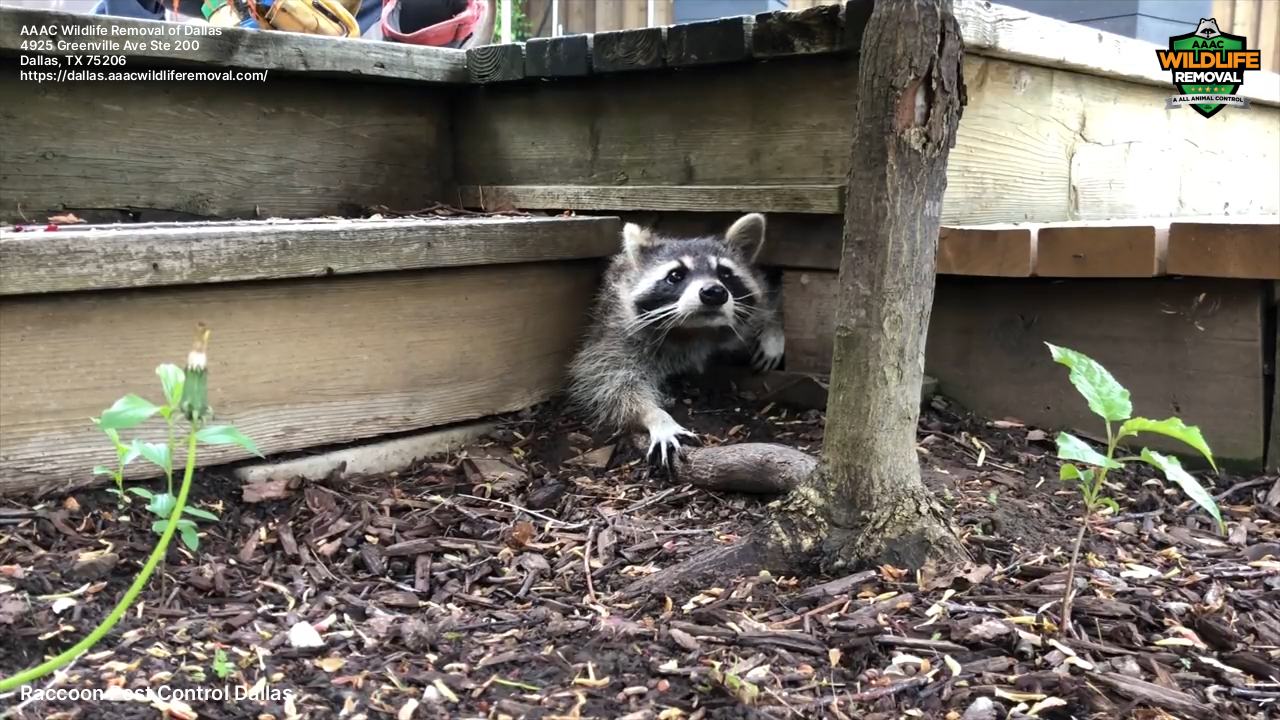
Raccoons don’t simply find openings, they create them. A typical adult can exert surprising jaw pressure and use those dexterous front paws like hands. On two-story homes, I often see climb patterns starting at a corner downspout or rough masonry. From there, raccoons test fascia boards, push in soffit vents, or pry up shingles where the roof meets a dormer. On single-story ranches, the weak spots tend to be at roof returns, attic vents, or rooflines where the decking is soft from moisture.
Chimneys are another favorite. An uncapped flue looks like a ready-made hollow tree. Once in, a female can settle on the smoke shelf and treat the chimney as a nursery. I’ve found entire litters there in late spring. Crawlspaces and attached garages invite entry when doors don’t seal tight or when lattice and skirting leave hand-sized gaps.
If there’s a pattern to all this, it’s simple: raccoons exploit the seam between what is supposed to be sealed and what has started to fail. Their strength lies in testing those seams without fear or fatigue. That is why wildlife pest control is, at its core, about meticulous inspection and detailed repairs, not just wildlife trapping.
Reading the signs before the damage piles up
Homeowners usually notice noise first. An attic with raccoons sounds different than an attic with squirrels. Raccoons produce heavy thumps and rolling steps, often clustered at dusk and just before sunrise. Squirrels patter lightly and scratch, especially during daylight. Bats create faint chittering and a dry rustle, most active right after sunset. Getting the identification right matters for both timing and methods, because improper trapping or sealing can separate a mother raccoon from her kits or trap non-target species.
Along with sounds, raccoons leave physical traces. They often tear open soffit lines, leave greasy rub marks where they squeeze through, and scatter insulation in routes that resemble footpaths. In attics, look for latrine areas. Raccoons repeatedly use one or two spots as toilets, leaving mounded droppings that are larger than cat feces and often full of seeds. The smell is pungent and persistent. On roofs, a lifted shingle near an edge can signal a pry point. In yards, tipped trash cans and disturbed compost bins are classic, but the footprints tell the story: hand-like front tracks and longer rear tracks, usually in pairs.
Water stains sometimes show up after raccoons disturb roofing or flashing. I’ve https://sites.google.com/view/aaacwildliferemovalofdallas/wildlife-trapping-dallas traced a bedroom ceiling leak to a raccoon that pushed an attic vent out by half an inch, just enough for wind-driven rain to intrude. Those secondary issues can cost more than the wildlife removal itself.
Health risks worth taking seriously
Most people have heard about rabies. While the prevalence varies by region and year, raccoons are a major rabies vector species in North America. The behavioral signs of rabies are not as simple as “aggressive.” Staggering, daytime activity, or a strangely uncoordinated raccoon might be sick, but healthy animals sometimes move around during daylight too, especially nursing females. Never approach a raccoon that seems disoriented, and don’t try to corner one. Professionals in wildlife control are trained to evaluate behavior and take appropriate precautions.
There’s another risk that gets less attention: raccoon roundworm (Baylisascaris procyonis). Its eggs can survive in the environment for years. Disturbing a latrine area without proper PPE can aerosolize dust, and if ingested, those eggs can cause severe illness. That’s why cleanup requires respiratory protection, disposable suits, and careful waste handling. I’ve seen DIY cleanup where people used a leaf blower to clear an attic, which is exactly the wrong approach. If latrines are present, plan for a methodical remediation.
Droppings and urine bring mold and bacteria, and saturated insulation loses its R-value. Chewed wiring is less common with raccoons than with squirrels, but it does happen. Trampled ducts leak. Every extra week you let animals stay adds to the restoration bill.
Seasonality and timing: when removal is tricky
Timing shapes the plan. In northern climates, January through March often brings solitary adults seeking shelter from cold snaps. By late March through early May, females look for den sites to birth kits. That changes everything. Evicting a mother raccoon without her offspring guarantees a frantic return or a dead litter hidden in a wall or soffit cavity. I’ve pulled kits from behind knee walls even when the primary den looked empty. If you hear high-pitched chirps or trills, the kits are there.
In summer, food is abundant and dispersal begins, which can lead to short-term attic visits rather than long-term denning. Fall brings another push as juveniles test structures. Where bats share attic space, you also have restricted windows for bat removal because of maternity season and legal protections, which means you must isolate species-specific entry points before any exclusion. This overlapping seasonality is one reason a full inspection matters even when you are confident it is “just raccoons.”
What a thorough inspection looks like
An inspection starts outside. I walk the perimeter, scanning from ground to ridge, and I do not skip the rear roofline or the side you can’t see from the street. I’m looking for shingle lift, chewed edges, loose soffit, dipping fascia, torn vents, or new staining. I check corners where downspouts meet roofs, gaps at utilities, and the chimney crown and cap. Binoculars help on steep roofs.
Inside, I begin in the attic with a bright light and a respirator. Insulation should look like fresh snow. Trails, compressed areas, and latrines jump out. I note the direction of travel and line it up with the roof map in my head. If there’s a chimney, I open the damper carefully, listening for movement on the shelf. Crawlspaces get the same treatment, with extra attention to foundation vents and sill plates.
I photograph every finding and build a list of entry points that need wildlife exclusion. One lesson from years in wildlife pest control: if you only fix the obvious hole, you’ll miss the “near misses” that become next month’s problem. A raccoon will test yesterday’s weak spots again.
Safe and humane raccoon removal methods
Trapping has its place, but it is not a universal solution. In urban and suburban zones, relocation rules vary, and moving adult raccoons can simply shuffle the problem to another block. More importantly, trapping during baby season without accounting for kits causes animal welfare issues and bad outcomes inside the structure. For most homes, one-way doors combined with targeted deterrence and immediate sealing provide better results.
An effective approach typically includes these steps:
- Confirm species and life stage. If kits are present, they must be located and reunited with the mother outside the structure. Pros carry inspection mirrors, thermal cameras, or use careful probing to find hidden litters. Install species-appropriate one-way devices on primary exits, then harden every secondary gap immediately so the animal exits and cannot reenter. Hardware cloth, heavy-gauge screening, and custom metal flashing beat foam and thin mesh every time. Use scent and sound deterrents sparingly and strategically. I’ve used talk radio, bright light, and predator-urine products to encourage movement when a mother is indecisive. None of these work alone without sealing and proper exits. Remove kits gently, place them in a warming box outside near the exit, and allow the mother to relocate them at night to an alternate den. This often takes a single evening when done correctly. Once clear, complete permanent repairs and sanitize latrine areas. Replace contaminated insulation and treat joists with an appropriate disinfectant. Bag waste according to local regulations.
Many jurisdictions require permits for wildlife removal or dictate trap types and relocation distances. A licensed wildlife removal operator knows these rules and works within them. If you do hire out, ask whether the provider follows humane best practices and if they include a return visit to verify that the structure is quiet and sealed.
Why exclusion is the long-term fix
Wildlife exclusion is the craft of denying entry by addressing building vulnerabilities with durable materials. The difference between temporary and lasting work comes down to materials, fasteners, and the judgment to reinforce where forces concentrate. A raccoon leverages edges, so your defenses must cover edges cleanly and be anchored into solid substrate.
Vents are a prime example. Off-the-shelf plastic vent covers might look neat, but raccoons can shred them. Heavy-gauge steel covers that screw into framing with tamper-resistant hardware stand up to prying. Chimney caps should be stainless steel with a tight mesh and a skirt that resists lift. For roof returns and corners, custom-bent sheet metal that tucks under shingles and over fascia creates a clean, chew-proof contour. When wood is rotted, replace it rather than simply skinning over it.
At ground level, deck skirting needs buried wire mesh that runs down and out in an L shape, so digging meets a barrier. Sill gaps around utilities should be sealed with a backer and a chew-resistant sealant, not just foam. Garage doors sometimes show a daylight line at the corners, wide enough for a raccoon’s paws. A simple bottom seal replacement and jamb repair can close that off.
Once you think you have sealed everything, challenge your own work. Assume a determined animal will test the weak point at 2 a.m. That mental exercise, repeated across the roofline, yields better wildlife control than any single gadget.
Costs, trade-offs, and when DIY makes sense
I understand why people try DIY first. If the entry point is visible and accessible, installing a one-way door and screening a single gap is within the comfort zone of many homeowners. The risk, however, rises with each of these factors: presence of kits, steep roofs, multiple unknown entry points, or signs of contamination. A fall from a ladder or a misstep through drywall can cost far more than a service call.
Professional nuisance wildlife management typically includes inspection, a written scope, photographic documentation, removal, repairs, and sanitation. Prices vary by region and structure complexity, but a simple one-point raccoon removal and exclusion often lands in the mid hundreds. Multi-point sealing with custom metal work, chimney cap installation, and insulation remediation can run into the low thousands. If a restoration crew needs to replace large areas of insulation and sanitize, expect more. Good operators back their exclusion with a warranty that covers new raccoon attempts at the sealed zones for a set number of years. That warranty has real value.
If you do take on a small DIY case, choose materials as if you expect a strong, clever intruder. Skip thin chicken wire, plastic, or plain expanding foam at any spot larger than a pencil. Wear a respirator rated for particulates when working near droppings, and avoid stirring dust. Keep pets and kids away from the work area until you have completed cleanup.
Trash, compost, and yard habits that tip the odds
Access to food is a powerful motivator. Even with perfect exclusion, a loaded garbage can without a locking lid invites nightly visits. I have watched raccoons climb a fence, swing onto a bin, and flip a simple clip with ease. Bungee cords rarely stop them. Lids that lock into the handle, gravity-fed locking designs, or bins stored in a closed garage until collection day reduce temptation.
Pet food is another lure. Feeding outdoors trains raccoons, skunks, and opossums to circle nightly. A single spilled cup can bring repeat traffic. Compost should be in a critter-resistant tumbler or a bin with half-inch mesh sides and a locking lid. Backyard poultry enclosures need buried skirt fencing and secure latches. Fruit trees drop snacks overnight. Regularly collecting fallen fruit helps.
Water features can draw wildlife in dry spells. That does not mean you must drain them, but be aware that a raccoon lingering for water may also test nearby structures. A well-lit yard with motion-activated lights can be modestly discouraging, though raccoons often ignore lights once habituated. Combine lighting with fewer attractants and a sealed structure for best results.
When multiple species complicate the picture
Raccoons rarely have the attic to themselves. Squirrels can use smaller gaps and sometimes share a neighborhood of access points. If your roofline sings at dawn with light skittering and at night with heavy steps, you might have both. That matters because squirrel removal strategies differ in hardware sizing and timing. For example, a one-way door sized for raccoons may fail to exclude squirrels, which can squeeze and reenter elsewhere.
Bat removal is even more sensitive. In many regions, you cannot legally exclude bats during maternity season, and even outside those windows you must use specialized one-way tubes and netting, not traps. This creates a coordination challenge when raccoons use the same attic. The sequence usually looks like this: isolate raccoon entries with solid sealing and one-way devices, ensure no bat colony is trapped, and schedule bat exclusion during the lawful window. A wildlife removal operator with experience across species will stage the work to keep it legal and humane.
The cleanup that protects your health and restores insulation
The job is not done until the contaminated areas are clean. Raccoon latrines are distinctive piles that can soak the sheathing beneath. If you can lift the edge of matted insulation and see dark staining on the wood, you have a cleanup task. The safe approach involves damping the area to prevent dust, removing droppings with disposable tools, double-bagging waste, and sanitizing wood surfaces. Enzyme-based cleaners help with odor, but disinfection is the priority. Insulation that is compressed, wet, or fouled needs replacement.
If ducts run through the attic, check for crushed or disconnected sections. Raccoons sometimes roll ducts like logs. That humid air leak encourages mold and ruins efficiency. Wiring that shows gnaw marks needs a licensed electrician’s look. While raccoons gnaw less than rodents, any damaged conductor is a fire hazard. These repairs turn a wildlife event into a home-performance opportunity: once the attic is clear, you can air-seal penetrations and install the right R-value insulation, which reduces energy costs.
Working with a professional: what to ask
Not all wildlife control companies operate the same way. Look for operators who emphasize inspection and exclusion rather than just trapping. Ask for photos of entry points and of the completed repairs. Inquire about their plan if kits are present. Confirm that they carry liability insurance and follow local wildlife regulations. If they mention guarantees or warranties, ask what they cover and for how long.
A good provider explains the sequence in plain terms, sets expectations about noises you might hear during the process, and schedules a follow-up to ensure the structure is quiet. If your home is tall or roof pitches are steep, ask about fall protection. That is a safety question, but it also signals professionalism.
A practical step-by-step for urgent raccoon situations
If you discover what you suspect is an active raccoon entry late on a weeknight, you can stabilize the situation safely while you wait for help.
- Protect the interior first. Close fireplace dampers and block off access to living spaces where possible. Keep pets indoors and away from the attic hatch. Avoid confrontation. Do not corner or attempt to chase the animal. Raccoons will defend themselves, especially mothers. Document signs. Take photos of exterior damage and note times of noises. That helps the technician plan. Reduce attractants. Secure trash, bring pet food inside, and close garage doors. Do not set out poison or snap traps, which are inappropriate and dangerous for non-target species. Call a licensed wildlife removal provider and describe what you hear and see. If you suspect kits, say so.
These actions prevent escalation and speed the professional’s work the next day.
Why prevention sticks: building a home that says “not here”
Wildlife learns quickly. A raccoon that is rebuffed by solid metal flashing and sealed vents is likely to move on to easier targets. Over time, neighborhoods develop reputations among local wildlife based on how easy structures are to breach and how consistent the food rewards are. That is where community behavior matters. If most houses on a block keep lids locked and structures sound, raccoon pressure eases. If half the block leaves overfilled bins out overnight, the pressure rises and shy raccoons become bolder.
For the individual homeowner, the best long-term prevention is a rhythm. Walk the exterior each season, especially after storms. Replace worn roof components before they fail. Cap the chimney, screen the vents, and seal utility penetrations with durable materials. Maintain a tidy yard and manage food sources. Keep a folder of inspection photos so you can spot new changes quickly.
I’ve returned to homes years after a thorough exclusion and found only scuff marks on metal and a few curious paw prints near sealed vents. The raccoons tried, tested, and moved on. That is the quiet success you want, and it is the payoff of doing wildlife control as craft, not as a one-time catch.
Final thoughts from the field
Raccoon problems feel personal when the sounds echo through a ceiling at 2 a.m., but the right response is methodical rather than reactive. Confirm what you are dealing with, respect the animal’s capabilities, and repair the building with materials that match those capabilities. Humane raccoon removal is compatible with strong protection for your home. It becomes more effective when you combine it with common-sense yard habits, careful sanitation, and a commitment to wildlife exclusion that outlasts a single season.
If your situation includes overlapping species or contaminated areas, do not hesitate to bring in a professional experienced in wildlife removal. The expense is often less than the cumulative cost of piecemeal attempts. Whether you manage it yourself or hire help, the principles remain the same: inspect thoroughly, remove humanely, repair durably, and prevent thoughtfully. Over time, that approach turns a noisy, expensive problem into a quiet, well-kept home that wildlife respects from a distance.